Author Spotlight: Debut Mystery Writer Christopher Seto Is Here!
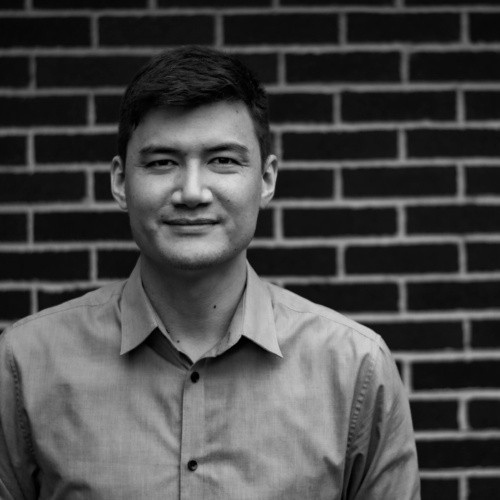 Christopher Seto had me at chocolate. The Chocolatier’s Curse, the first book in his Tule Mystery series, Notes on a Murder, drew me in, and I knew I wanted a chance to chat with him. We had a ball, particularly when we discovered that we were both Purdue Boilermakers. I’m so glad to introduce him to you today! He’s here with book 2 in the Notes on a Murder series, The Vanishing Stone, which releases on April 8. but is available for pre-order right now!
Chris earned his Ph.D. in criminology from Penn State and is presently an assistant professor at Purdue University. When not writing about fictional or non-fictional crimes, he enjoys reading, origami, and performing sleight of hand-based magic tricks. Chris lives in Indiana with his wife, daughter, three cats, and one lizard. You can check out his website or connect with him on Bluesky.
N: Welcome to the blog, Christopher. I’m so pleased to have you with me today. So, what inspired you to start writing?
A: Hi Nan, thanks so much for having me! I think I was inspired to write by my love of reading books. Throughout my whole life, I’ve often wanted to recreate the things I find interesting or enjoyable. For example, I have a very strong memory of seeing an animatronic sculpture at a science museum when I was young—and then wanting to go home and build my own version. I wasn’t really able to, but that’s how I got started tinkering with electronics and (many years later) going to school for electrical engineering. Anyway, it was kind of the same way with books. I’ve always loved books, and so I’ve always wanted to create my own. I started writing at a very young age, but I had trouble sticking with any one idea long enough to get much of a story down on paper. One of my earliest murder mysteries was a short story about a woman named Storm who dies at a seafood restaurant after eating poisoned clams. It was titled: The Clam Before the Storm, and I ended up using the same pun to name the inn where Theo and his employers stay during The Vanishing Stone.
N: Your Notes on a Murder series is your first published fiction. What is the most surprising thing you discovered about yourself while writing The Chocolatier’s Curse and then following up with The Vanishing Stone?
A: It’s a strange thing to admit, but my most surprising moment of self-discovery was learning that planning out murders is very therapeutic for me. Not in, like, a cathartic way, to be clear. I don’t write people I know into my stories and then kill them off. What I mean is that the puzzle of constructing a good fair-play plot gives my brain something to chew on when I would otherwise just be worrying. I’m a naturally anxious person, and writing mysteries has actually been quite helpful for managing my tendency toward obsessive thinking.
N: What does your “day job” as an assistant professor of sociology at Purdue (Go Boilers!) bring to your stories?
A: My research and teaching tend to focus on criminology, so my job provides a lot of opportunities for thinking about crime! The caveat is that the sorts of things that precipitate murder in the real world don’t usually map cleanly onto the plot structure of a whodunit. This distinction is actually kind of a reoccurring joke in my series. Theo has all this knowledge about crime in a general sense, but it’s not applicable because he’s stuck in a murder mystery novel. That said, I do teach a course in which I have my students read a bunch of classic crime fiction and then we use it as a gateway for discussing criminological theory.
N: How did you balance suspense with character development in The Vanishing Stone?
 A: It actually felt a lot easier to achieve this balance while writing The Vanishing Stone (my second book), compared with The Chocolatier’s Curse (my first book). And that’s mostly because of all the incredibly helpful feedback that Julie, my editor, gave me on Chocolatier. So going into the sequel, I had a much stronger sense of who the characters were, as well as a better feeling of how to pace out events. Thanks, Julie!
N: How much of yourself is in your protagonist, criminology PhD student Theo Chan?
A: Oh, Theo’s very much just a fictional version of myself. To be honest, I don’t really know how to write in a voice other than my own. Theo’s a bit nosier than I am, but that was simply a necessary personality adjustment to motivate some of his sleuthing throughout the series.
N: What was the most challenging aspect of writing mystery? Motivation? Developing the killer’s character and the victim’s character? Creating a chilling atmosphere? How did you overcome those hurdles?
A: I think the hardest part for me is keeping things streamlined. I tend to want to stuff clues and red herrings onto every page, because the puzzle is what’s fun and motivating for me. So, my first drafts usually have a lot of extra stuff (characters, scenes, dialogue) that I thought was interesting but winds up being kind of distracting for most everyone else. Again, Julie is very good at helping me trim down this excess. Also my wife, Elaina, reads all my books first and gives me great pointers on this sort of thing.
N: How do you balance teaching, parenting, and the rest of your busy life with writing mysteries?
A: When my daughter Wren was a bit younger, she didn’t like to take naps unless she was sitting in someone’s lap. So I actually wrote a significant portion of The Vanishing Stone while holding her in a darkened room. I’d keep my laptop screen brightness as low as possible to avoid waking her up. These days, Wren is more comfortable sleeping on her own, so I do a lot of my writing late at night. I’m the only night owl at my house (except for the cats), so like 10ish to midnight is when I get the most writing done.
N: And now for a few sort of personal questions because readers love to know more about us beyond our writing life: What do you like to do when you are not writing?
A: I like hanging out with Elaina and Wren. We go to a lot of parks when the weather is nice. Lately, it’s been cold here, so we’re spending more time at the library. We’ve also been having a lot of fun teaching Wren how to say words. Apart from family time, I also like reading, running, and origami. I also spend a fair bit of time doing statistical analysis and writing nonfiction for my other job.
N: If you could tell your younger writing self anything, what would it be?
A: I don’t think this is necessarily what the question is trying to get at, but the first thing that came to mind is that I would tell my younger, writing self the plot of Magpie Murders and encourage him to try to write and publish it before Anthony Horowitz does in 2016. There are just so many good ideas in that book! Though I’m sure I don’t have the writing chops to put them to paper as effectively as Anthony Horowitz did.
N: What did you want to be when you grew up?
A: It changed quite a bit across time. From about the age of five to thirteen, I wanted to be a professional magician. I’ve always loved magic tricks, and for a few years during this phase (maybe like eight to twelve) I actually performed shows at birthday parties. My stage name was “Conjurer Chris.” My dad drove me to my gigs, I had business cards, and I even brought along my pet mouse, which I produced from thin air as part of the finale. During high school, I didn’t really know what I wanted to be, but I imagined it would be a scientist of some sort. I started college on the engineering track but thought I might like to go to law school after graduation. I’d taken a sociology class by then, really loved it, and decided I was going to double-major in sociology and electrical engineering. For a couple of years in college, I pretty seriously wanted to become an FBI agent. My plan was to finish my undergrad degrees, then go to law school, then apply to a job at the FBI related to some technological aspect of federal law enforcement. I didn’t decide that I wanted to be a professor until halfway through my PhD. And I didn’t know I wanted to be a mystery novelist until a year or two after that.
N: Favorite book when you were a kid?
A: I was really into fantasy and science fiction. Harry Potter, Chronicles of Narnia, pretty much anything by Eoin Colfer. I was a big fan of the Hunger Games trilogy even before the movies came out. I actually didn’t really get into reading mysteries until grad school. I’m struggling to think of a single, standalone book that was my clear favorite as a kid, but one book I’ve loved for a long time is The Phantom Tollbooth. That probably ranked in my top ten throughout childhood.
N: Are you working on anything at the present you would like to tell our readers about?
A: Sure! I have a couple ideas bouncing around at the moment. One is for a fourth installment of the Notes on a Murder series. Another is a spooky, standalone mystery that’s more in the horror genre than anything I’ve written so far.
N: Finally, my favorite question to ask my guests: If you could choose three people, living or dead, real or fictional to invite to a dinner party, who would they be and why?
A: What a great question! I’m feeling a little overwhelmed by choices, so I’m just going to share the first three people who came to mind. And they actually all happen to be authors!
(1) Edgar Allan Poe. I’ve been a big fan ever since I read The Tell-Tale Heart in high school. I just love the vibe of his stories. Creepy and atmospheric but also very precise. I’m not sure what we’d talk about over dinner. It might be a weird conversation.
(2) Octavia Butler. Whenever I read Butler’s work, I’m just blown away by how extraordinarily well-suited it is to our present historical moment, even though she died in 2006. In the class I mentioned earlier, my students read one of her essays called A Few Rules for Predicting the Future and also her dystopian novel Parable of the Sower, which was published in 1993, but happens to be set right now (2024-2027). Both are fantastic. I would love to spend dinner hearing her thoughts on current events. I feel that very little would surprise her.
(3) John Green. Okay, so maybe it’s weird to include a living person on this list—and one presently living only like an hour away from me, no less—but John Green is one of my longtime role models, and I’d just really love to meet him. I also think he’d get along well with my other guests, since he has an Edgar Award (for his novel Paper Towns) and has called Parable of the Sower “brilliant” and “endlessly rich.”
N: I’m so glad you could join us today, Christopher. Please come back soon, okay?
A: This has been a blast, Nan! Thanks so much for the invite!
Giveaway!
A central theme of The Vanishing Stone is the idea that things from the past (secrets, mistakes, misdeeds) don’t always stay buried. For a chance to win a signed copy of “The Vanishing Stone,” share about a time from your own life when something from the distant past managed to unexpectedly affect the present.
The Vanishing Stone
 Criminology Ph.D. student Theo Chan vowed he’d never get tangled in another murder. But when a cryptic late-night call drags Theo and his shadowy employers, Primrose and Teebin, to a remote island village, he’s forced to confront the one thing scarier than a killer: the secrets people will kill to protect.
The case? Find local legend Edmund Stone, who vanished twenty-six years ago, leaving behind nothing but rumors. It seems benign—until they stumble onto a brand-new murder. Now someone has smashed a dollhouse replica of the island’s most haunted manor, and the killer is teasing them with eerie limericks in a twisted game.
As Theo and his team chase riddles through windswept graveyards, storm-battered cliffs, and long-forgotten locked rooms, every villager becomes a suspect. Who wants the past to stay buried? And what secrets does Primrose conceal in her own shadowy past? In a village where everyone has something to hide, unmasking the truth could turn Theo’s second case into his last.
Perfect for fans of atmospheric mysteries and amateur sleuths with everything to lose, adventure will keep you guessing until the final jaw-dropping twist.
Amazon | B&N Nook | Apple Books | Kobo | Google Play